


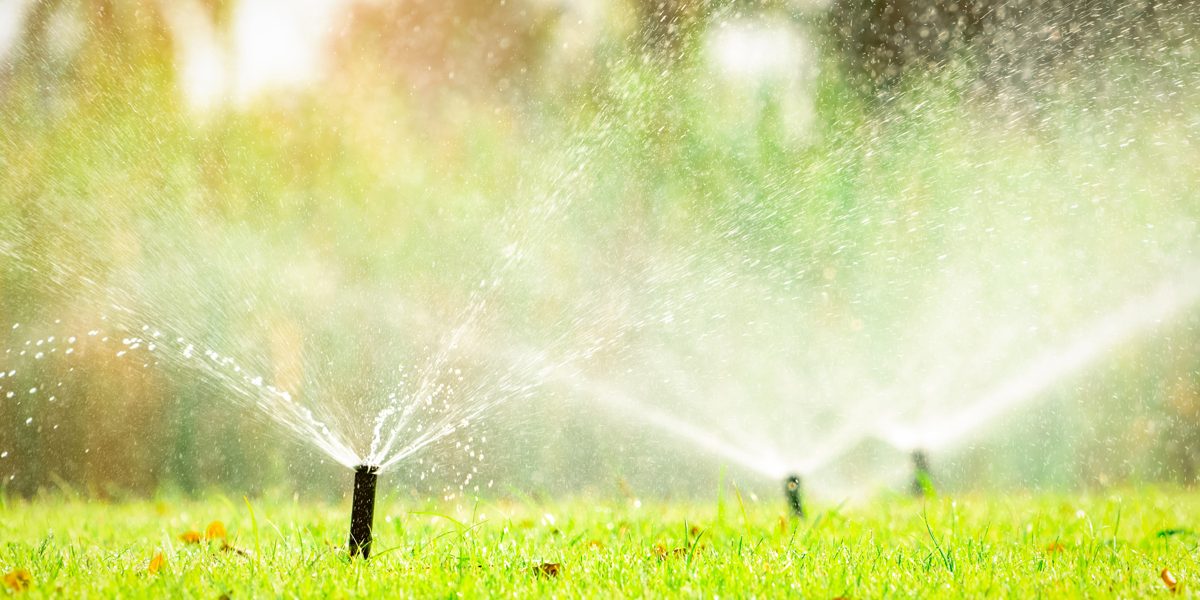
Irrigation systems are commonly installed very shallow into the ground or above ground. This makes them quite susceptible to freeze damage. Learn how to winterize your irrigation system below.
Use these steps below to properly winterize your irrigation system. The following method is in place to prevent any potential freeze damage.
Step 1. Turn Off The Water To The System
The first step of this process is turning the water to the system off. The majority of these systems will have a valve that can be turned off in order to isolate the sprinklers from the water service.
Commonly, this is referred to as the isolation valve. It is often found below ground in a circular box featuring a green lid. It is also possible for the valve to be located in a crawl space or garage. Once you have found it, turn the valve off to stop the water flow to your irrigation system.
Step 2. Turn Off Your Timer
If your irrigation system operates on an automatic timer, make sure to turn this off. Some timers come with a ‘rain mode’, allowing for the system to be turned off without losing a programmed schedule.
Check your user manual for the timer to check what the best option for your system is. If the system is run off a hose bib timer, disconnect both the hose and timer. Store these items in a protected area like a shed or garage.
Step 3. Completely Drain The System
Once the water is turned off, drain your piping of any existing water. Do this to ensure it doesn’t freeze and ultimately damage your system. Many irrigation systems are made of plastic piping that can crack when water freezes inside.
The way you should drain your system depends on how the system was installed in the first place. It’s always best to follow the manufacturer’s instructions for this step. Below are a few of the most common ways to drain a system.
Manual Draining:
- This is done by opening the manual drain valve(s) to allow the water to drain from the irrigation system.
- With this method, make sure water is also drained from the backflow preventor.
Automatic Draining:
- Systems complete with automatic drains will drain as soon as the system shuts off.
- However, you still need to manually drain any water from the backflow preventor.
Blow Out Method:
- With this method, you will hook up an air compressor to the pipes in order to force any remaining water outward.
- It’s always best to hire the professionals to perform this method.
Step 4. Insulate
The last step is to insulate any components that may be above ground. This does include any possible hose bibs. You can use foam or insulation tape for this task.
It’s also recommended to add some insulation for components located below ground that are placed in boxes. This includes the controls and backflow preventor. An easy way to do this is by adding wood chips or insulation foam to the box.
Sonoran Landscape Design In Arizona
We are a Full-Service Design and Build Landscape Contractor. Working within your budget, we will help guide you from the design stage, through construction, all the way to completion. We can even maintain your landscape after completion to ensure your investment stays looking its best.
We offer outdoor fireplace, kitchen, pool, water feature, pergola installations, artificial turf installations, and more! Our highly qualified staff that will ensure you receive a quality landscaping job done, with lasting value! Contact our team today!